It stands in for a company's values and for how that company wants to be seen. So when I take one on, I read past the content to the larger context underneath — what the business believes, and whether its actions bear that out. The hardest part is never the layout. It's making the whole thing feel true to a brand's voice rather than staged for the occasion.
No two stakeholder demands pull in the same direction. This case study examines how competing environmental, societal, economic, and governance pressures were mapped, weighted, and ultimately reconciled into a coherent CSR strategy.
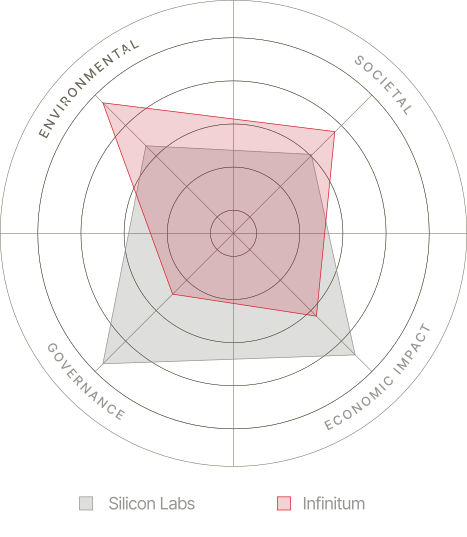
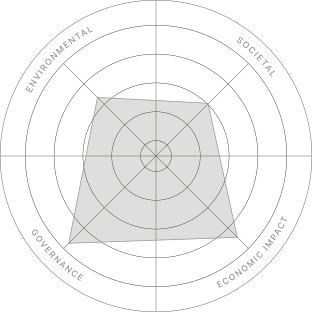
Two Austin companies, two responsibility reports, two completely different stories. Infinitum's impact is built into its product; Silicon Labs' products power the impact of others. Mapping both against the same four pressures shows how CSR strategy bends to who a company answers to.
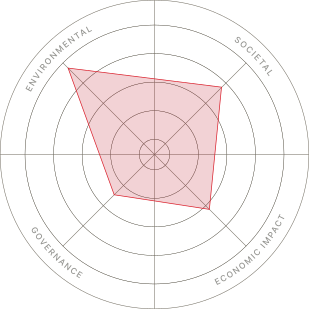
Ultralight electric motors built on a PCB stator, cutting weight by half while running more efficiently.
The product itself
Customers & investors
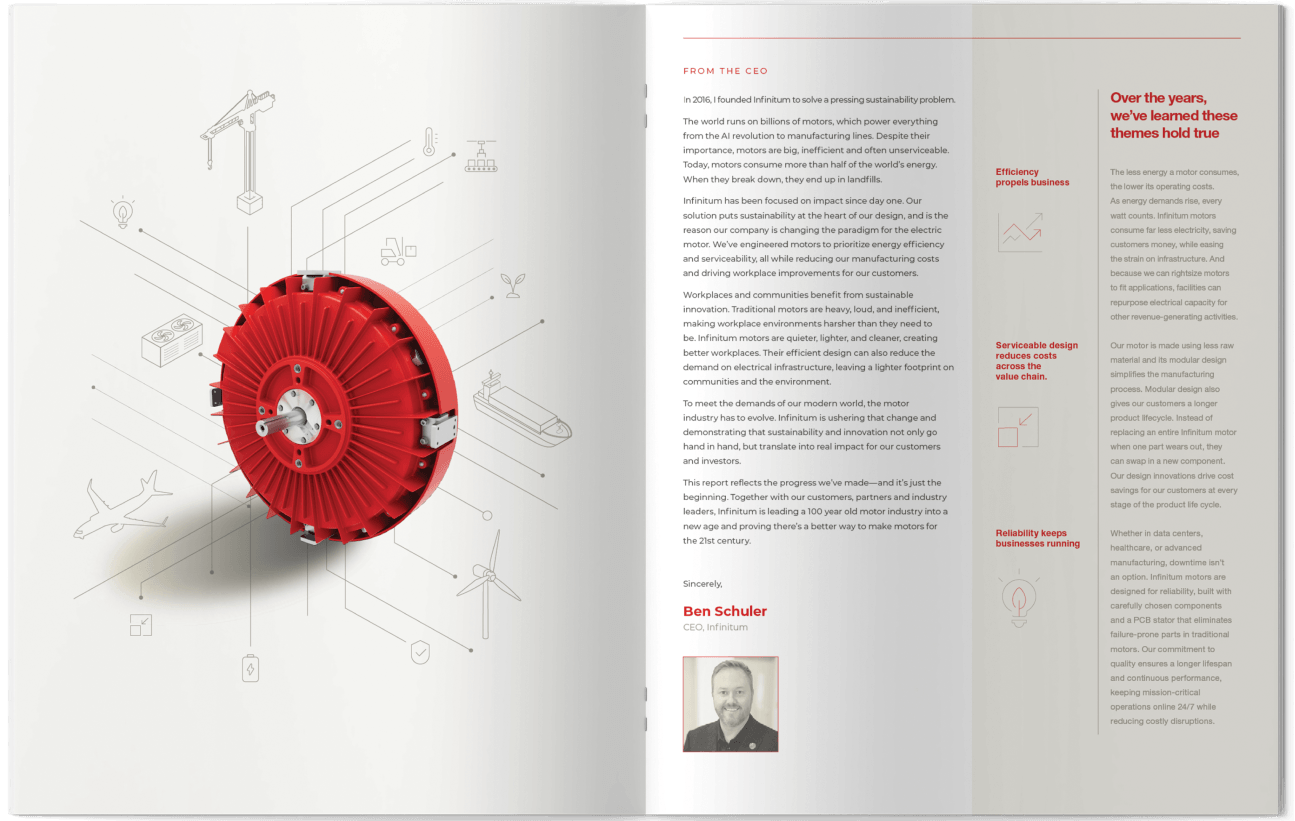
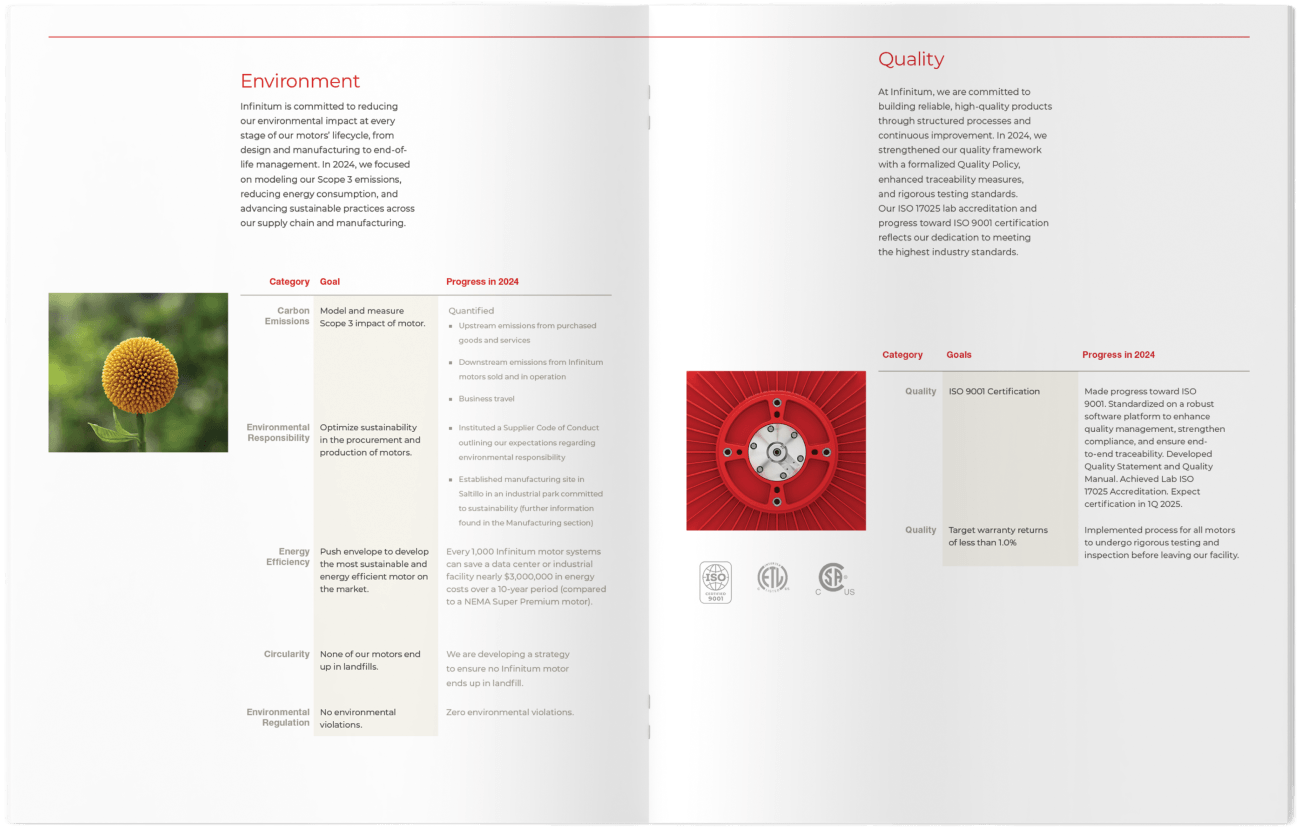
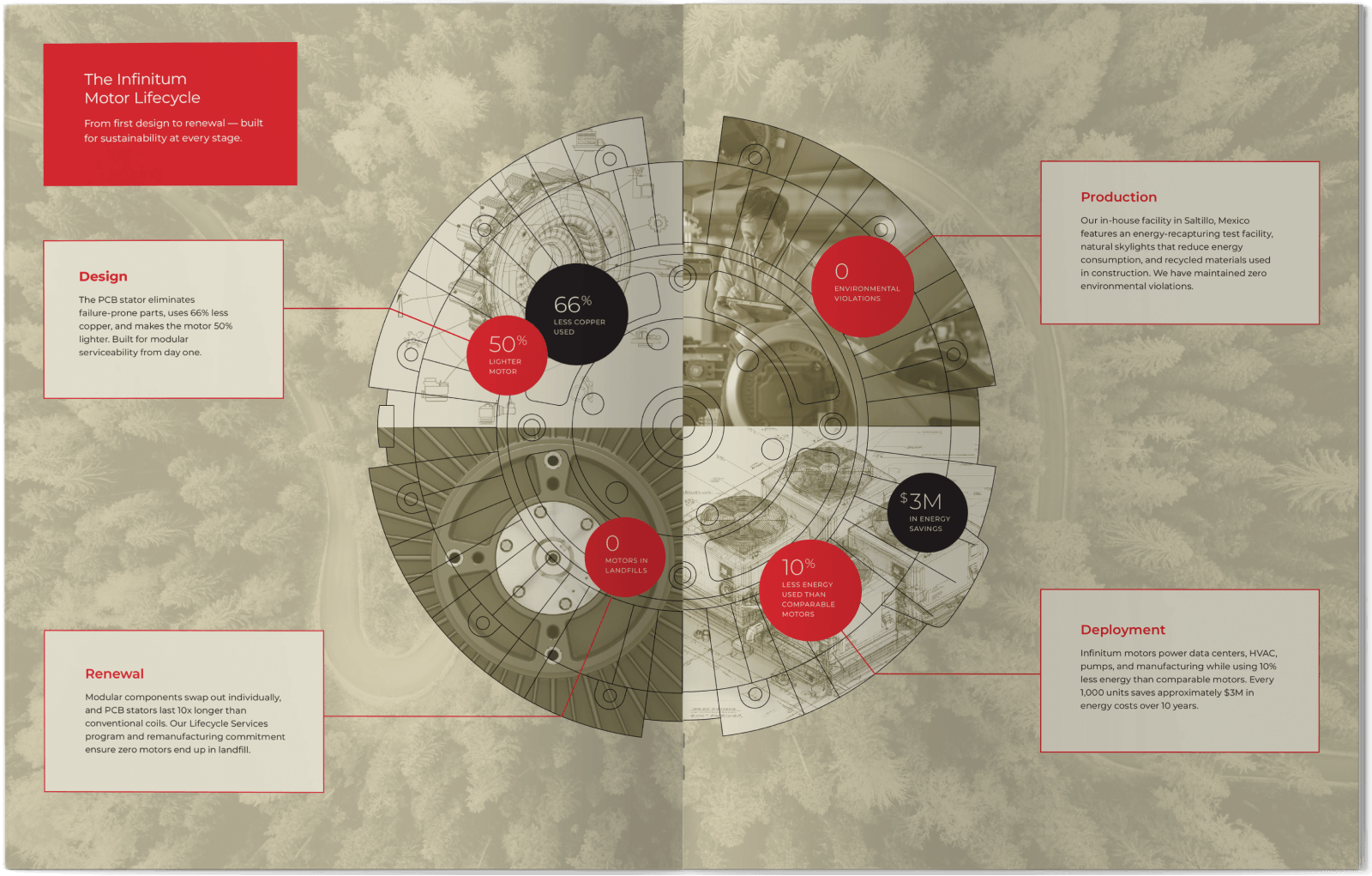
Infinitum builds electric motors with embedded chip intelligence — motors that sense how they're being used and adjust in real time. The result runs cooler, lasts longer, and draws less energy, with the biggest gains in the most climate-intensive applications: HVAC systems and industrial equipment like robotic arms. The CSR report leaned into that strength, foregrounding the environmental payoff alongside the sheer appeal of the technology itself.
Low-power wireless chips that give IoT devices their connectivity, from smart homes to industrial systems.
Disclosure & oversight
Shareholders & regulators
Silicon Labs makes low-power wireless chips for smart edge devices, with integrated support for every major connectivity standard — Bluetooth, Zigbee, Thread, Wi-Fi, Z-Wave, and Matter, the unifying smart-home standard Silicon Labs helped develop. The report was built for shareholders, centered on proving the growth model for wireless edge computing. The environmental and societal upside of more efficient connectivity was acknowledged but deliberately understated, given the current political climate.
Two Austin companies, two responsibility reports, two entirely different shapes. Infinitum builds its identity into the product; Silicon Labs builds its into the disclosure. Read against the same four pressures, the contrast reveals how strategy bends to whoever a company must answer to.

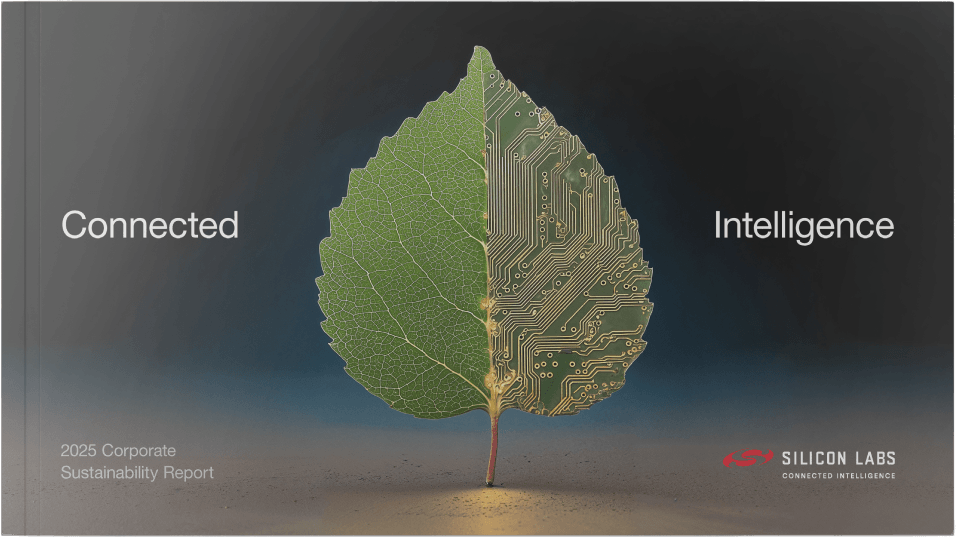
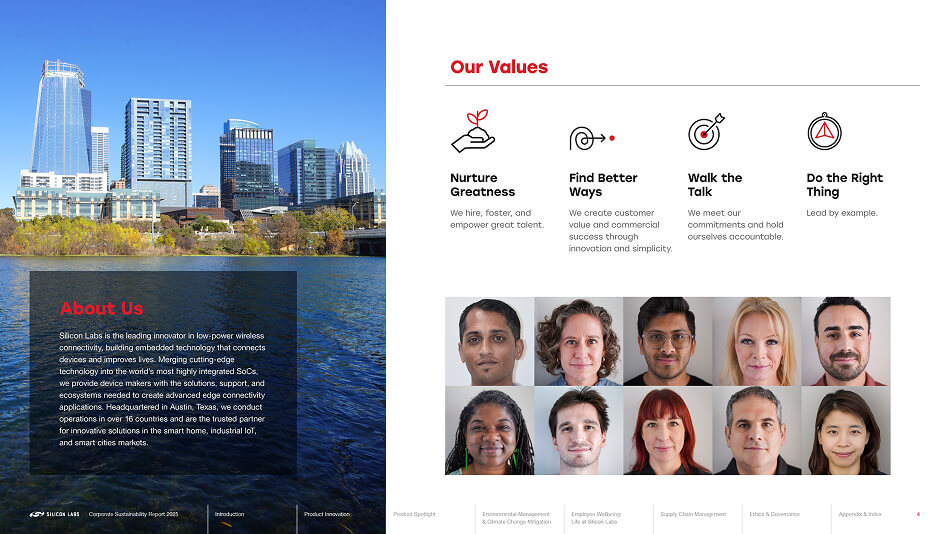
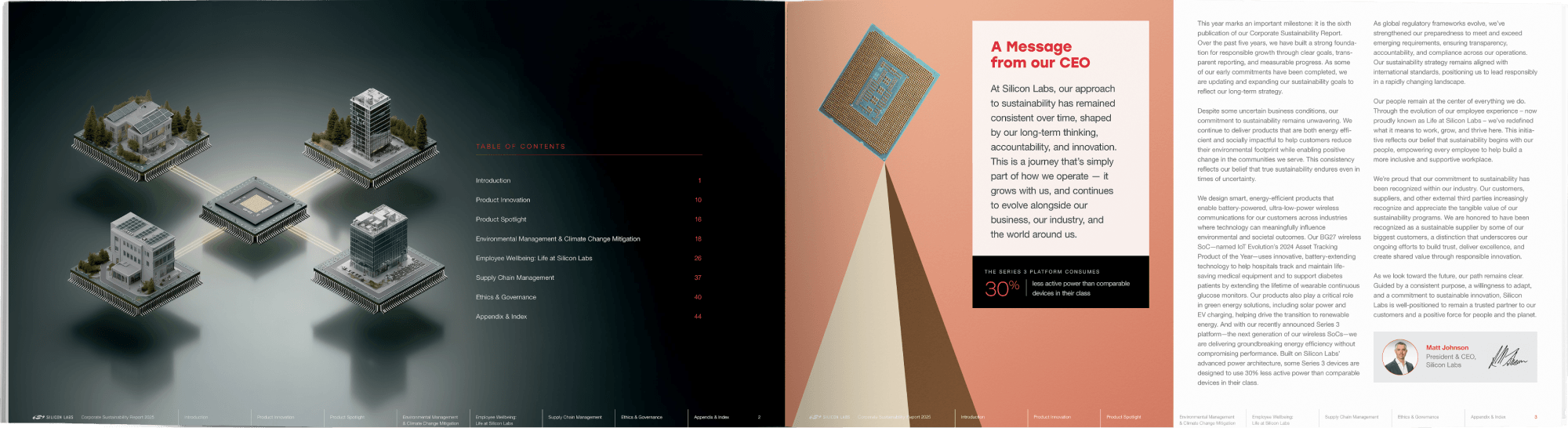
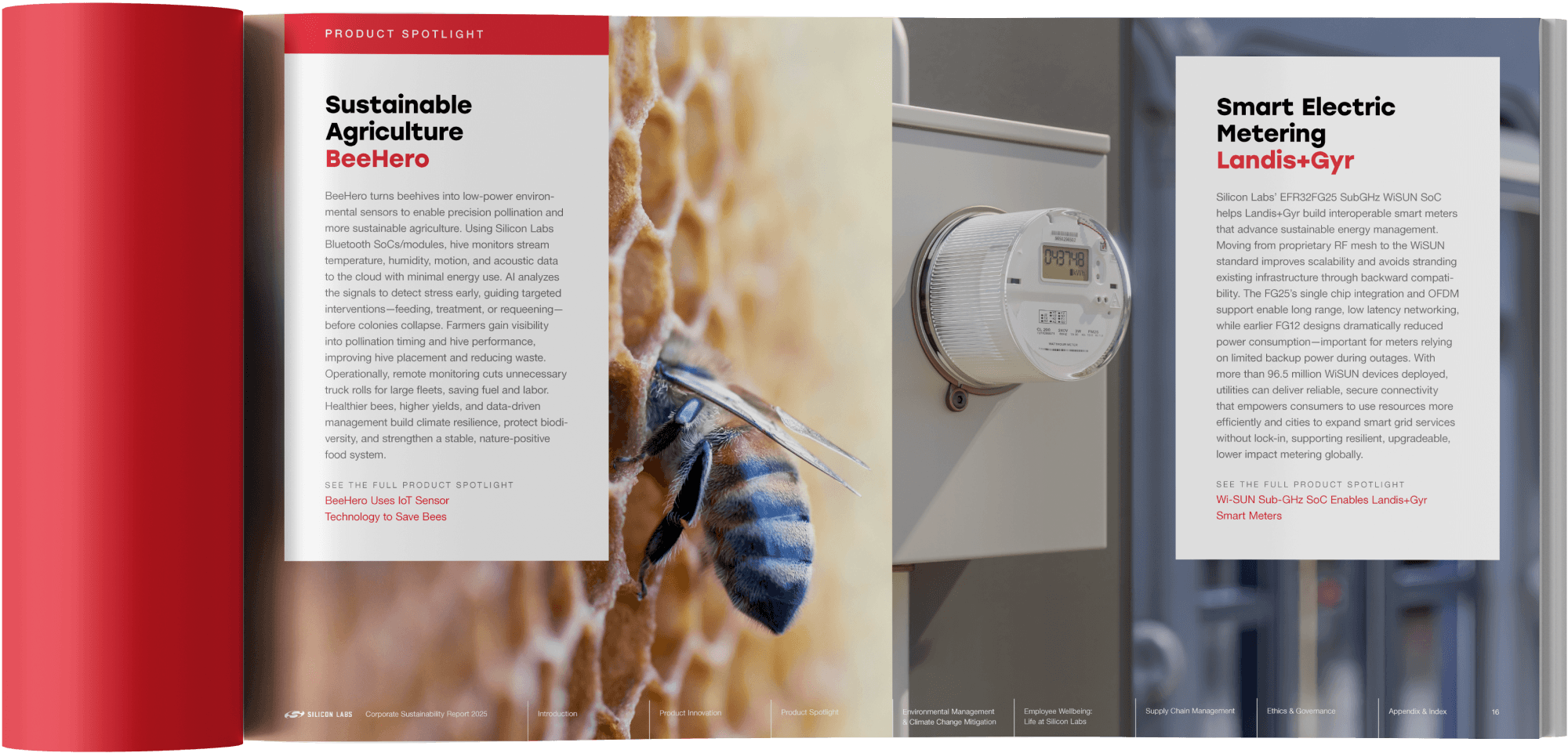
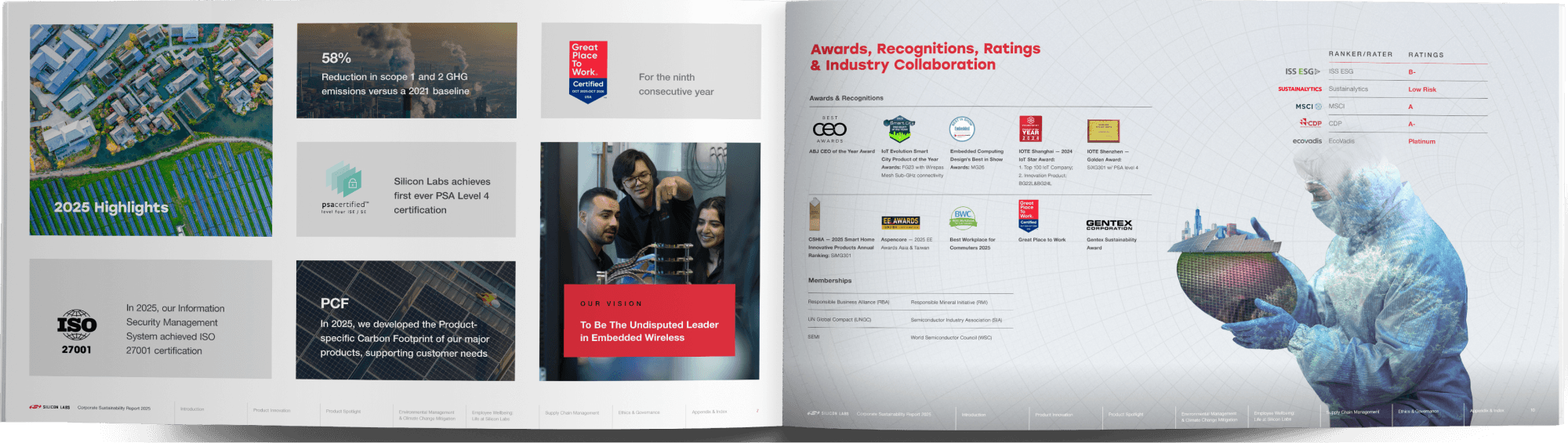
Silicon Labs reports because regulation demands it, so the design had to make compliance feel like conviction. I set the living beside the engineered — a leaf against connectivity, a hive against a mesh network, employees against the skyline they work in. The data is rigorous by requirement; the imagery keeps it from reading as procedure.
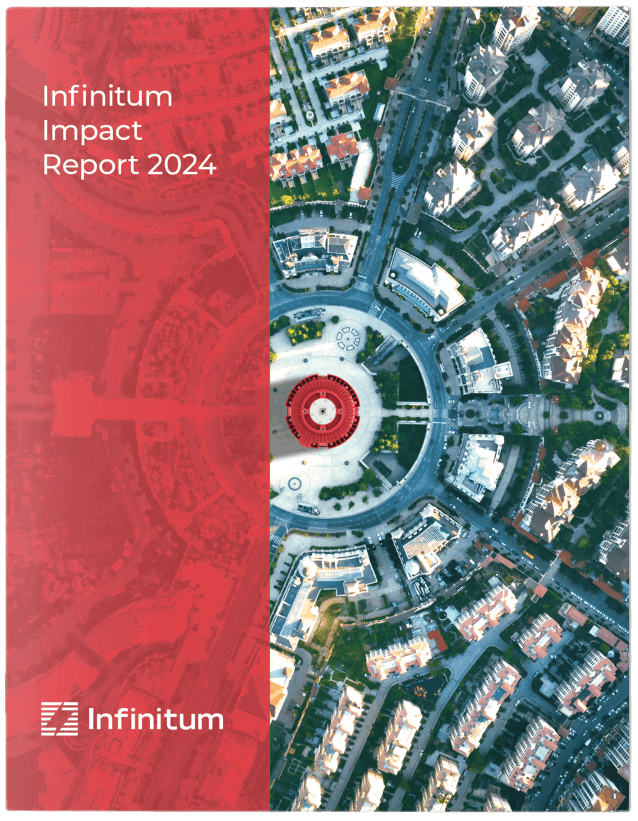
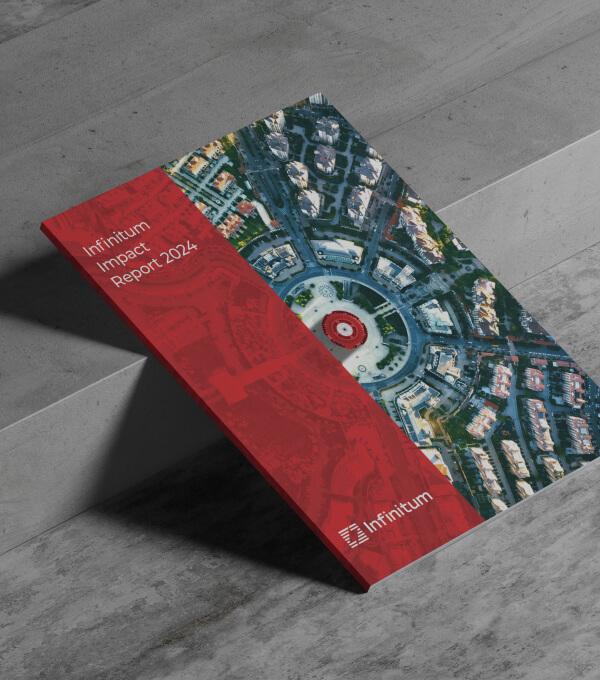
Infinitum faced the reverse. Its product is already the argument, and ornament would only dilute it. I held the brand system without deviation, letting one motor carry the book — turned across angles and contexts, always against the neighborhoods, farms, and facilities its efficiency quietly alters. Restraint is the message: nothing needs dressing up.
Same brief, opposite instincts. One earns belief by warming up, the other by refusing to. Silicon Labs called its book a Sustainability Report; Infinitum's was an Impact Report. By the time both were finished, each title had become accurate.